Dentist vs Orthodontist: What’s the Difference and Who Should You See?
16 August 2020 | Updated: 13 April 2026

Dentists and orthodontists both play an important role in keeping your teeth healthy and your smile looking its best. However, many patients are unsure about the difference between the two and when to see each one.
While their work overlaps in some areas, their training and focus are quite different. Understanding this distinction can help you make the right decision for your treatment.
The Key Difference at a Glance
The simplest way to understand it is:
All orthodontists are dentists, but not all dentists are orthodontists.
Dentists focus on overall oral health, while orthodontists specialise in aligning teeth and jaws.
What Does a Dentist Do?
A dentist is your primary dental care provider. They diagnose, treat, and help prevent a wide range of oral health issues affecting your teeth, gums, and mouth.
Common treatments provided by dentists:
Dentists are the first point of contact for most dental concerns and play a key role in maintaining long-term oral health.
What Does an Orthodontist Do?
An orthodontist is a dentist who has completed additional specialist training in orthodontics, focusing on the alignment of teeth and jaws.
Their goal is to improve both function and appearance by correcting bite issues and straightening teeth.
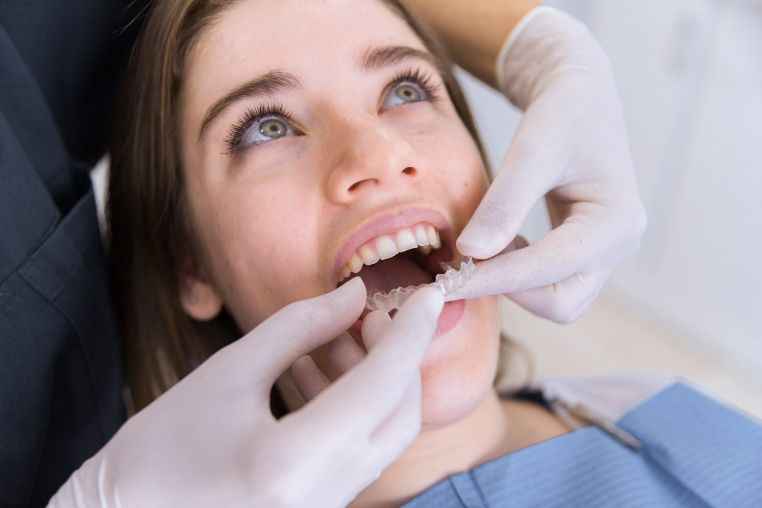
Orthodontists commonly treat:
Treatments provided by orthodontists:
Orthodontists undergo additional years of training after dental school, which allows them to plan and manage more complex alignment treatments.
Dentist vs Orthodontist: When Should You See Each?
See a dentist if you:
See an orthodontist if you:
- Are concerned about crooked or misaligned teeth
- Have bite issues (overbite, underbite, crossbite)
- Are considering braces or clear aligners
- Have been referred for specialised alignment treatment
In many cases, your dentist will be the first to identify alignment issues and may recommend seeing an orthodontist if needed.
Who Should You Choose for Braces?
If your goal is to straighten your teeth or correct your bite, an orthodontist is usually the best choice.
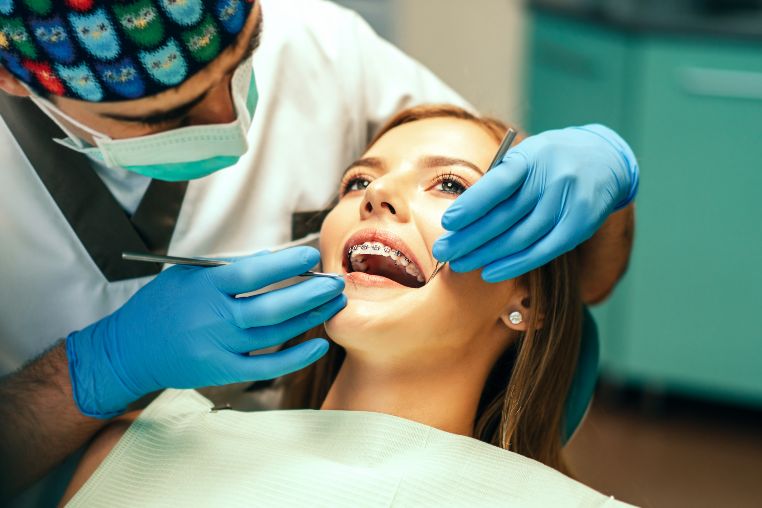
While some dentists offer basic orthodontic treatments, orthodontists have advanced training in tooth movement and bite correction. This allows them to:
- Plan more precise treatments
- Manage complex cases
- Reduce the risk of complications
- Achieve more predictable, long-term results
Think of it this way: for general care, you see your dentist. For specialised alignment, you see an orthodontist.
Do You Need a Dentist During Orthodontic Treatment?
Yes, absolutely.
Even if you are undergoing orthodontic treatment, regular dental check-ups and cleanings remain essential. Dentists and orthodontists often work together to ensure both your oral health and alignment are properly managed.
Supporting Your Oral Health at MGA Dental Clinic
Both dentists and orthodontists play an important role in maintaining a healthy, confident smile. Knowing when to see each can help you get the right care at the right time.
At MGA Dental clinic, we provide comprehensive dental care along with guidance on orthodontic treatment when needed. Our experienced team focuses on prevention, early detection, and personalised treatment plans tailored to your needs.
If you are unsure whether you need a dentist or an orthodontist, feel free to contact MGA Dental in the Gold Coast or Brisbane to book a consultation. We are here to support you and your family at every stage of your dental journey.
FAQs
1. Is an orthodontist better than a dentist?
Not necessarily. Dentists and orthodontists serve different roles. Dentists focus on overall oral health, while orthodontists specialise in aligning teeth and correcting bite issues.
2. Do I need a referral to see an orthodontist?
No, you can book directly with an orthodontist. However, your dentist can help identify if specialist treatment is needed.
3. Can a dentist do braces?
Some dentists offer basic orthodontic treatments, but orthodontists have additional training and are better suited for more complex cases.
4. Should I still see my dentist if I have braces?
Yes. Regular dental check-ups and cleanings are important to maintain oral health during orthodontic treatment.
5. At what age should you see an orthodontist?
Orthodontic assessments are often recommended around age 7, but treatment can be effective at almost any age.