June 16, 2026
When Does Facial Swelling Become a Dental Emergency?
Dr Goran Prokic explains why facial swelling should not be ignored or simply monitored at home, as it requires prompt professional assessment.

A dental emergency can escalate quickly, often outside standard clinic hours and with little warning. Sudden tooth pain, facial swelling, or oral trauma can quickly disrupt daily life. When eating, speaking, or sleeping becomes difficult, uncertainty tends to set in fast.
In these moments, many people face a practical question: should the Emergency Room (ER) be the first stop, or is urgent dental care the better option?
The answer is not always obvious. A dental emergency is not necessarily a medical emergency, and choosing the wrong care pathway can delay proper treatment, prolong pain, and increase the risk of complications. Understanding where to seek help makes a meaningful difference to both comfort and outcomes.
This article provides clear guidance on when a hospital emergency department is necessary and when treatment from an emergency dentist is the better choice.
A dental emergency refers to any condition affecting the teeth, gums, or jaw that requires prompt professional attention to relieve pain or prevent the condition from getting worse. Not every dental issue requires urgent treatment, but some symptoms should never be ignored and call for immediate assessment by a dental professional.
Common dental emergencies include:
The urgency lies in the risk of infection spread, nerve involvement, or permanent tooth damage. A dental emergency often involves inflammation or infection that cannot resolve without intervention. Early treatment reduces the likelihood of complications, reduces discomfort, and can make treatment simpler and more predictable.
While many dental problems are best managed by a dentist, some situations require immediate medical attention. The Emergency Room (ER) is designed to manage serious or potentially life-threatening conditions, particularly when dental symptoms are linked to broader health risks.
Going to the ER is appropriate when a dental problem is accompanied by:
In these cases, medical stabilisation is the priority. Emergency Rooms can administer intravenous antibiotics, manage airway risks, and address trauma-related injuries.
It is important to note, however, that ERs generally do not provide full dental treatment, such as extractions, root canal procedures, or restorative procedures. In most cases, follow-up with a dentist is still required once the immediate medical concern has been addressed.
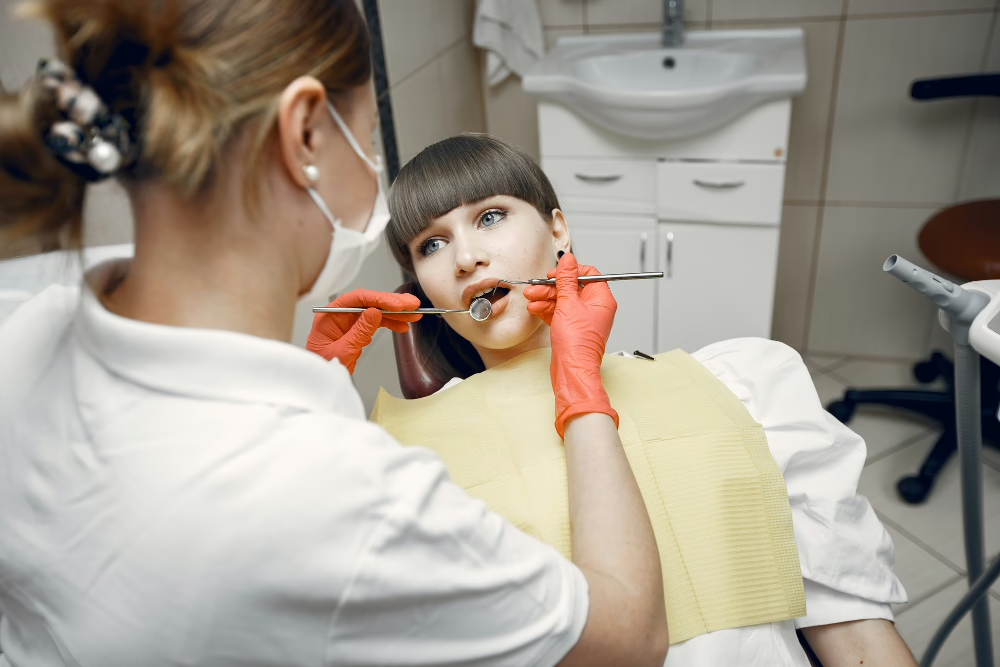
For most dental emergencies, seeing a dentist trained in urgent dental care is the most appropriate first step. These professionals are experienced in diagnosing acute oral conditions, identifying the underlying cause, and providing treatment that directly addresses the problem.
Dental clinics are also equipped to deliver emergency dental treatment, whether that involves managing pain, controlling infection, or stabilising damaged teeth.
Conditions that are best managed by an emergency dentist include:
This type of pain usually indicates damage within the tooth that requires dental treatment, such as removal of decay, infection control, or nerve therapy, rather than temporary pain relief.
Localised abscesses can often be drained and stabilised by a dentist, addressing the source of infection before it spreads or becomes more serious.
Emergency dentists can assess the extent of damage, stabilise the tooth, and determine whether it can be repaired or requires further treatment to prevent long-term complications.
When a restoration is lost, the exposed tooth can become sensitive or vulnerable to damage, and prompt dental care helps protect the tooth and restore function.
These conditions often respond well to dental cleaning, local treatment, and targeted care that cannot be provided outside a dental setting.
Dry socket requires dental management to relieve pain and support healing, as standard pain medication alone is usually ineffective.
An emergency dentist can identify the source of pain, address the cause rather than the symptoms, and begin definitive treatment. Dental clinics prioritise urgent cases and often offer same-day or weekend appointments, helping patients achieve faster relief and reducing the likelihood of ongoing or repeat issues.
Delaying care during a dental emergency can have consequences that extend beyond discomfort. Dental infections do not resolve on their own and can progress if untreated. What begins as localised pain may evolve into more complex infection involving the jawbone or surrounding tissues.
Potential risks of delayed or inappropriate care include:
Attending an emergency department for a dental emergency may provide temporary symptom relief, such as pain medication or antibiotics, but often without resolving the source of the problem. This can lead to recurrence and additional distress. Direct access to urgent dental care reduces these risks and supports more predictable outcomes.
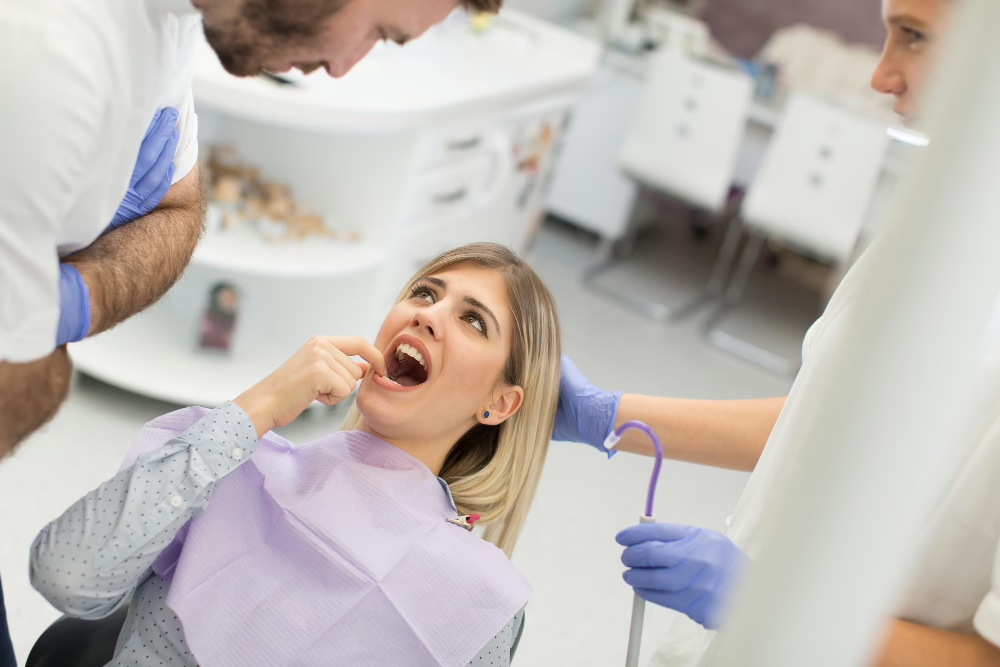
Emergency dentistry focuses on rapid assessment, pain control, and stabilisation. The goal is to address immediate symptoms while laying the groundwork for long-term resolution.
Emergency dental care typically involves:
Unlike temporary medical treatment, emergency dentistry focuses on addressing the underlying cause of the problem. For example, a dental abscess can be treated directly to relieve pressure and control infection, with follow-up care planned to prevent it from returning. This approach provides clearer answers for patients and helps them understand what needs to be done now and what may be required next.
When a dental emergency occurs, access to the right care matters. Emergency dental clinics are designed to assess and treat urgent problems quickly, often offering same-day appointments to relieve pain and control infection.
Choosing an emergency dentist means being treated by professionals experienced in urgent dental conditions and familiar with local healthcare needs. For issues such as severe toothache, dental abscesses, or oral trauma, dental care is usually the most effective way to achieve lasting relief.
MGA Dental clinic provides emergency dental services in Brisbane and the Gold Coast, focused on stabilising the problem and restoring comfort. Treatment may include care for infections and abscesses, emergency tooth extractions, root canal therapy to preserve affected teeth, and targeted pain management.
Patients can expect clear communication, assessment based on symptom severity, and guidance on any follow-up care that may be required.Rather than attending an ER, where dental issues are often managed only temporarily, patients are encouraged to contact MGA Dental directly. The emergency dental team is available seven days a week, including after hours and weekends, to ensure urgent dental problems are treated appropriately.

June 16, 2026
Dr Goran Prokic explains why facial swelling should not be ignored or simply monitored at home, as it requires prompt professional assessment.
March 9, 2026
Dental emergencies can arise without warning and often at the most inconvenient time. A sudden toothache late at night, a sports injury on the weekend, or unexpected facial swelling can quickly become overwhelming. In these moments, knowing what to do and where to seek care is important. A dental emergency may involve severe pain, trauma, […]

November 19, 2025
A sporting injury can happen in an instant – whether it’s a stray elbow on the basketball court, a collision on the football field, or a fall while cycling, the result can be more than just bruised pride. It can lead to a chipped, broken, or even a knocked-out tooth. Sports-related dental injuries are among […]

October 24, 2025
Losing a tooth can be distressing, but staying calm and acting quickly can make all the difference in saving it. When a tooth is completely displaced from its socket, known as a knocked-out or avulsed tooth, it becomes a true dental emergency. The outcome depends on how the tooth is handled and how soon professional […]
May 30, 2022
If you’ve ever noticed a ringing or buzzing sound in your ears with no clear cause, the source of the problem might actually be your jaw. The temporomandibular joint (TMJ), the hinge connecting your jaw to your skull, is essential for everyday functions like chewing and speaking. When this joint becomes strained or misaligned, it […]

January 28, 2022
If you’ve ever noticed white, brown or yellow stains on your teeth and opaqueness on the tooth enamel, you could have a case of hypocalcification. The enamel is the topmost layer of the teeth, right on top of the dentin, and its function is to protect the layers underneath. Hypocalcification is a condition of low […]

November 29, 2021
Imagine you’ve just made dinner and are ready to eat. You take your first bite and feel a sharp pain in your teeth. You ask yourself “Why do all my teeth hurt suddenly?”. According to a survey published by American Family Physician, around 22% of adults have experienced pain in their teeth, gums, or jaw […]

November 18, 2021
Molar tooth pain can make everyday tasks like eating or speaking difficult and uncomfortable. Because molars play a key role in chewing, any pain in this area can quickly affect your overall oral health. Understanding the common causes of molar pain, from cavities and gum infections to tooth grinding or impacted wisdom teeth, is essential […]
November 2, 2021
The gingival sulcus, also known as free gingiva, is the space where “the gums and teeth meet“, or the natural space between the gum tissue and the surface of the tooth. The Gingival sulcus is a very small V-shaped space around 3 millimetres in depth around the tooth and gums. The cementoenamel junction is located […]