Dental Crowns and Bridges Explained: A Complete Patient Guide
18 October 2019 | Updated: 3 February 2026
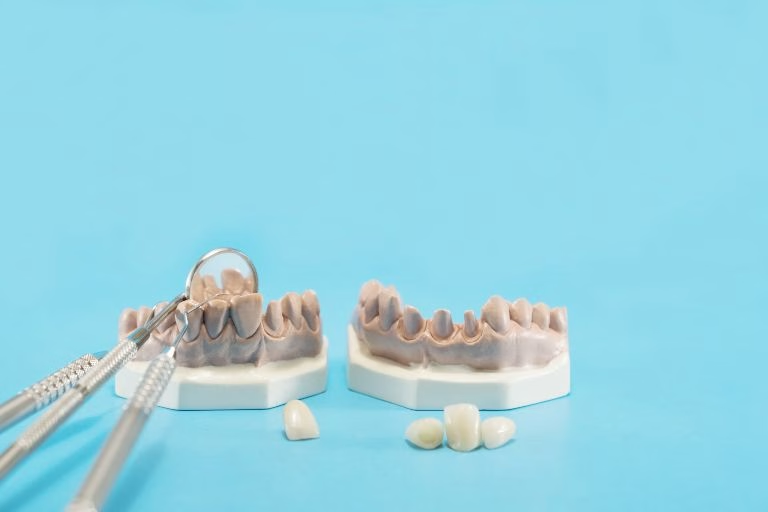
If you have a damaged tooth or are missing one or more teeth, dental crowns and bridges are two of the most reliable and widely used restorative solutions in modern dentistry. They are designed not only to restore the appearance of your smile, but also to protect tooth structure, improve chewing function, and maintain the health of your bite.
In this article, we explain what dental crowns and bridges are, when they are recommended, the different types available, and what you can expect from the treatment process. Understanding your options makes it easier to have an informed conversation with your dentist and choose a solution that suits your oral health and lifestyle.
What Is a Dental Crown?
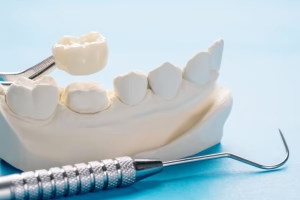
A dental crown is a custom-made cap that fits over an existing tooth. It restores the tooth’s original shape, size, strength, and appearance while protecting it from further damage.
Crowns are commonly recommended when a tooth is too compromised to be restored with a filling alone. This may include situations such as:
Once placed, a crown allows the tooth to function normally again while blending in with the surrounding teeth.
Materials Used for Dental Crowns
Dental crowns can be made from several materials, each with specific advantages. Your dentist will recommend the most suitable option based on tooth location, bite forces, aesthetics, and durability needs.
Common crown materials include:
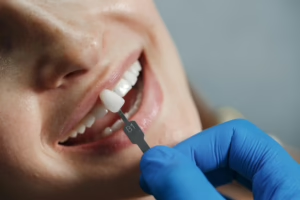
- All-ceramic or porcelain crowns: highly aesthetic and often used for front teeth due to their natural appearance.
- Porcelain-fused-to-metal (PFM) crowns: combine strength with reasonable aesthetics and are commonly used for back teeth.
- Metal alloy crowns (including gold alloys): extremely durable and resistant to wear, often requiring less tooth removal. While less aesthetic, they remain one of the longest-lasting options.
- Composite resin crowns: more affordable but generally less durable than other materials.
Each material offers a different balance of strength, appearance, and longevity, which is why choosing the right crown is a personalised decision made in consultation with your dentist.
What Is a Dental Bridge?
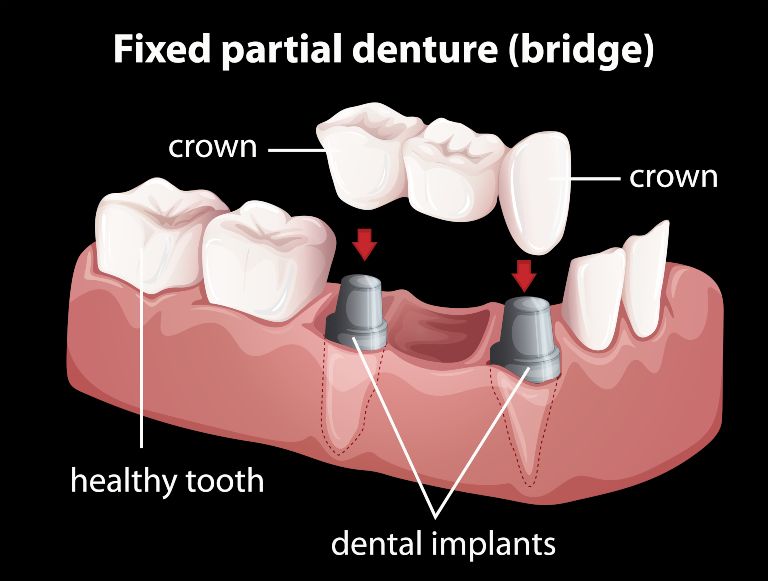
A dental bridge is used to replace one or more missing teeth by “bridging” the gap between existing teeth or implants. It consists of one or more artificial teeth, known as pontics, supported by crowns or implants on either side of the space.
Dental bridges help restore chewing efficiency, prevent surrounding teeth from shifting, and maintain facial structure. They are a common alternative to removable dentures and can feel very natural once placed.
Types of Dental Bridges
There are several types of dental bridges, each suited to different clinical situations:
Traditional Dental Bridges
These are the most commonly used bridges. Crowns are placed on the teeth adjacent to the gap, which support the artificial tooth in between. Traditional bridges are strong and reliable, but they require reshaping the supporting teeth. One consideration with traditional bridges is that the adjacent teeth need to be reshaped to accommodate the supporting crowns.
Cantilever Bridges
Cantilever bridges are supported by a crown on only one side of the missing tooth. They are used when only one adjacent tooth is available, though they are typically recommended only in areas with lower bite pressure.
Maryland (Resin-Bonded) Bridges
These bridges use a metal or porcelain framework bonded to the backs of adjacent teeth. They are more conservative, as they require minimal tooth preparation, but they rely heavily on bonding strength and may not be suitable for high-stress areas. A key limitation of Maryland bridges is that their stability depends entirely on the strength of the bonding resin, which may not withstand heavier biting forces over time.
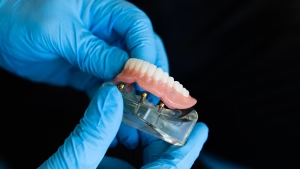
Implant-Supported Bridges
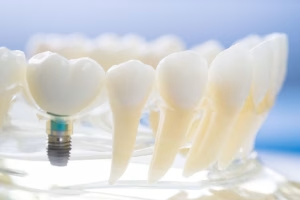
When multiple teeth are missing, implant-supported bridges may be recommended. Instead of relying on natural teeth, dental implants anchor the bridge securely in the jawbone. This option offers excellent stability and helps preserve bone health.
Dental Crown and Bridge Procedure
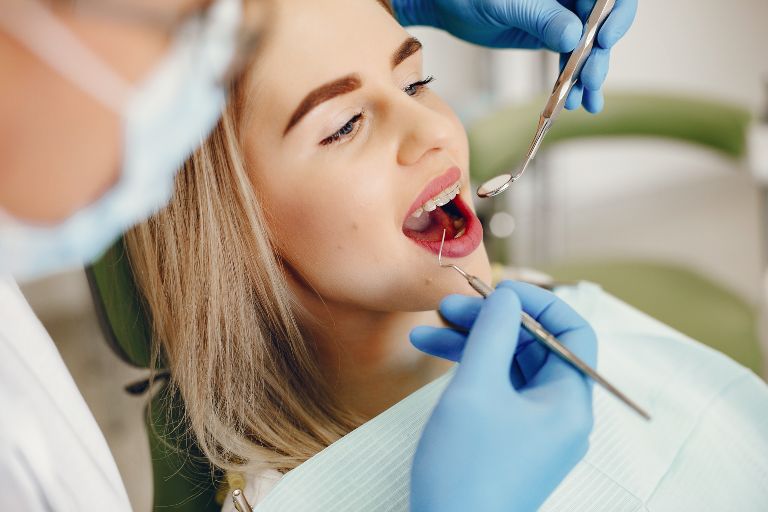
The dental crown and bridge procedure is a carefully planned process designed to restore strength, function, and appearance while ensuring a precise and comfortable fit.
Dental Crown Treatment
The process for placing a dental crown typically involves two appointments:
-
Preparation and assessment
Your dentist examines the tooth, takes X-rays if needed, reshapes the tooth, and takes impressions or digital scans. A temporary crown is placed to protect the tooth.
-
Final placement
Once the custom crown is ready, it is carefully fitted, adjusted, and cemented in place.
In some cases, same-day crowns may be available using advanced digital scanning and milling technology.
Dental Bridge Treatment
Dental bridge treatment follows a similar process:
-
The supporting teeth or implants are prepared
-
Impressions or scans are taken
-
A temporary bridge may be placed
-
The final bridge is fitted and secured at a follow-up visit
After placement, proper care and regular dental reviews are essential to ensure long-term success.
Caring for Crowns and Bridges
Crowns and bridges are designed to be durable, but their lifespan depends heavily on oral hygiene and routine dental care. Good habits include:
With proper care, crowns and bridges can last many years and provide reliable, comfortable function.
Dental Crowns and Bridges at MGA Dental Clinic
If you have damaged or missing teeth, a personalised treatment plan is essential to achieve the best outcome. At MGA Dental clinic, our team takes a comprehensive approach to restorative dentistry, carefully assessing your oral health, bite, and long-term needs before recommending crowns, bridges, or alternative solutions.
We focus on restorations that are functional, durable, and natural-looking, while ensuring your comfort at every stage of treatment.
If you are considering dental crowns or bridges, contact MGA Dental to book a consultation at our Brisbane or Gold Coast clinics. Our experienced team will guide you through your options and help restore your smile with confidence and care.