Diastema Explained: Causes of Front Teeth Gaps and Treatment Solutions
15 March 2021 | Updated: 4 February 2026

A visible gap between the front teeth can affect how confident you feel about your smile. Some people embrace it as a unique feature, while others feel self-conscious and may smile less as a result.
If a front teeth gap is bothering you, the good news is that modern dentistry offers several safe and effective ways to address it.
From a medical perspective, a small gap between the front teeth is usually harmless. In many cases, it does not affect oral health or function at all. However, when a gap develops due to underlying dental issues or begins to change over time, it may be worth having it assessed by a dentist.
This type of gap is known as diastema, a common dental condition that can affect both children and adults. Understanding why it occurs and what your treatment options are can help you make an informed decision about your smile.
What Is Diastema?
Diastema refers to a visible space between two teeth, most commonly the upper front teeth. Dentally, a gap is typically considered diastema when it measures around 0.5 millimetres or more.
In children, a gap between the front teeth is often part of normal development and usually closes naturally as permanent teeth come through. In adults, however, diastema tends to persist and may be influenced by genetics, oral habits, or gum health.
While diastema can appear between any teeth, gaps between the front teeth are the most noticeable and are therefore more likely to prompt people to seek treatment.
What Causes a Gap Between the Front Teeth?
There is no single cause of diastema. In most cases, it develops due to one or more contributing factors:

Genetics
Family history is one of the most common reasons for a front teeth gap. Tooth size, jaw shape, and spacing patterns are often inherited. If close relatives have a similar gap, genetics may be the primary factor.
Gum Disease
Untreated gum disease can damage the supporting structures around teeth, leading to gum recession and bone loss. As support weakens, teeth may shift and create gaps, including between the front teeth.
Enlarged Labial Frenum
The labial frenum is the thin band of tissue connecting the upper lip to the gums. When it is unusually thick or positioned low between the front teeth, it can prevent the teeth from coming together properly.
Tooth Size Discrepancy
When teeth are smaller than average relative to jaw size, spacing can occur. This imbalance may result in visible gaps even when teeth are otherwise healthy.
Oral Habits
Habits such as thumb sucking, tongue thrusting, or improper swallowing patterns can place pressure on the front teeth over time. In children, these habits may worsen an existing gap or prevent it from closing naturally.
Diastema Treatment Options
Treatment depends on the cause of the gap, your oral health, and your personal preferences. Broadly, treatment options fall into orthodontic and non-orthodontic approaches.
Closing a Front Teeth Gap With Braces or Aligners
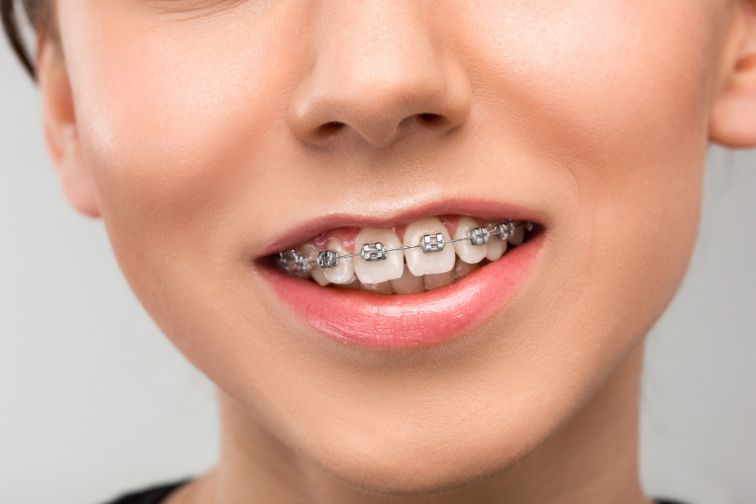
Orthodontic treatment remains one of the most predictable and long-lasting ways to close a gap between the front teeth.
Modern orthodontics has advanced significantly, offering solutions that are far more discreet and comfortable than traditional metal braces. Today’s options range from subtle fixed braces to nearly invisible clear aligners, with more discreet systems typically coming at a higher cost. In some cases, treatment can be limited to the front teeth rather than the entire arch.
Braces and clear aligners work by gradually guiding teeth into their ideal position. The process is controlled and generally painless, although mild pressure may be felt as the teeth move.
Treatment length varies, but closing a front teeth gap often takes between 12 and 24 months, depending on the complexity of the case.
Closing a Front Teeth Gap Without Braces
For patients who prefer alternatives to orthodontics, several restorative options may be suitable.
Dental Implants
If the gap is due to a missing tooth, a dental implant may be recommended. An implant replaces the tooth root and supports a natural-looking crown, restoring both function and appearance.
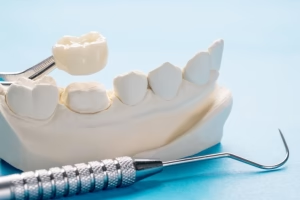
Dental Bridges
A dental bridge uses neighbouring teeth for support and fills the space with a carefully shaped artificial tooth. This option can restore the appearance of a complete smile when implants are not suitable.
Treatment of Gum Disease
When diastema is caused by gum disease, addressing the infection is the first priority. Once gum health is stabilised, additional treatment may be considered to improve tooth alignment or spacing.
Frenectomy (Minor Surgery)
If an enlarged labial frenum is responsible for the gap, a small surgical procedure may be performed to remove or reposition the tissue. In some cases, orthodontic treatment is still required afterwards to fully close the space.
Can a Front Teeth Gap Be Prevented?

Not all gaps can be prevented, particularly when genetics play a role. However, certain measures can reduce the risk of diastema developing or worsening.
Good preventive habits include:
Early dental assessment is especially important for children, as intervention at the right time can prevent future spacing issues.
When Should You See a Dentist?
A front teeth gap is not always a problem, but changes in spacing, gum health, or bite alignment should be evaluated. If diastema affects your confidence, speech, or ability to clean between teeth, professional advice can help clarify your options.
Dental Care Support at MGA Dental
If a front teeth gap is affecting how you feel about your smile, a personalised assessment can help determine the most suitable approach. At MGA Dental clinic, our experienced team offers comprehensive evaluations and tailored treatment options designed to protect your oral health while enhancing your smile.
Whether you are exploring orthodontic solutions, restorative treatments, or simply want reassurance, we are here to help. Contact MGA Dental to book a consultation and take a confident step toward a healthier, more balanced smile, with clinics conveniently located in Brisbane and the Gold Coast.