What Is a Cantilever Dental Bridge and When Is It Used?
29 September 2022 | Updated: 9 December 2025
If you are missing one or more teeth, you may already be exploring options to restore your smile and chewing function. Dental bridges are a common solution, but a traditional bridge is not always suitable for every situation. When neighbouring teeth are not strong enough to provide support on both sides, a cantilever dental bridge may be considered as an alternative.
A cantilever bridge can help replace a missing tooth when standard bridge options are limited. However, it is not suitable for everyone, which is why understanding how it works and when it is recommended is important before making a decision.
In this article, we explain what a cantilever dental bridge is, how it works, who it is best suited for, and what alternative tooth replacement options may be available.
What Is a Cantilever Dental Bridge?
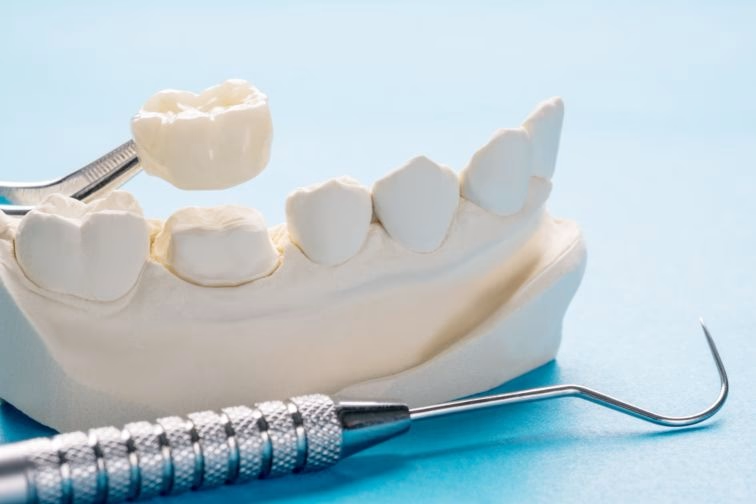
A cantilever bridge is a type of fixed dental bridge used to replace one or more missing teeth. It consists of an artificial tooth, known as a pontic, which fills the gap, and a crown that is attached to a single supporting tooth.
Cantilever bridges are commonly made from metal and ceramic materials, although all-ceramic options are also available. The choice of material depends on factors such as tooth location, bite forces, and aesthetic preferences.
How Does a Cantilever Bridge Work?

Unlike a traditional dental bridge, which relies on two supporting teeth, a cantilever bridge is anchored on just one adjacent tooth. The artificial tooth is placed into the space where the tooth is missing, and the supporting crown is fixed onto the healthy tooth next to it.
Because only one abutment tooth is required, this option may preserve more of the surrounding tooth structure. However, it also means that the supporting tooth carries more load, which is why careful case selection is essential.
Who Is a Good Candidate for a Cantilever Bridge?
Traditional bridges require two strong, healthy teeth on either side of the missing tooth. If this is not possible, a cantilever bridge may be considered.
You may be a suitable candidate if:
-
Only one tooth is missing
-
One adjacent tooth is healthy enough to provide support
-
The tooth on the other side is weakened, decayed, or unsuitable for crown placement
-
Aesthetic considerations make preparation of two teeth undesirable
Your dentist will assess the strength of the supporting tooth, your bite, and the location of the missing tooth before recommending this option.
Benefits of Cantilever Dental Bridges
Cantilever bridges offer several advantages for suitable patients:
-
They restore normal chewing and biting function
-
They help maintain the position of surrounding teeth
-
They improve the appearance of your smile and confidence
-
The procedure is relatively straightforward and often does not require anaesthesia
-
Only one tooth needs to be reshaped, helping preserve natural tooth structure
-
The procedure is reversible if future treatment options are considered
-
They are generally more affordable than some other bridge options
Drawbacks to Consider
While cantilever bridges can be effective, they do have limitations.
Because they rely on support from only one tooth, they are not as strong as traditional bridges. For this reason, they are typically recommended for front teeth rather than back teeth, where biting forces are higher.
Patients with cantilever bridges need to be cautious when chewing hard foods and avoid using teeth to open packaging or apply pressure. In cases where multiple teeth are missing or chewing forces are significant, alternative treatments may be more appropriate.
What Are the Alternatives to a Cantilever Bridge?

A cantilever bridge is just one of several options for replacing a missing tooth. The most suitable solution depends on factors such as the location of the missing tooth, the health of neighbouring teeth, your bite, and your overall oral health. A thorough dental examination, including bite analysis and imaging, helps determine which option will provide the best long-term outcome.
A traditional dental bridge uses crowns placed on two adjacent teeth to support the artificial tooth in between. Because it is supported on both sides, this type of bridge offers greater stability than a cantilever bridge and is commonly used when the surrounding teeth are healthy enough to support crowns.
Traditional bridges are widely used and can provide reliable, long-lasting results when properly maintained.
Dental implants replace the tooth root and act as a stable foundation for a crown or bridge. In some cases, an implant-supported bridge may be recommended instead of a tooth-supported option, particularly when multiple teeth are missing.
Implants can help preserve jawbone structure and do not rely on neighbouring teeth for support. However, overall health conditions such as osteoporosis or diabetes can influence implant suitability and healing, which is why a detailed assessment is essential before proceeding.
Partial Dentures
Partial dentures are a removable solution used to replace one or more missing teeth. They can be a suitable option when fixed treatments are not recommended or when budget considerations are a factor.
While effective, partial dentures require daily cleaning and regular adjustments over time to maintain comfort, fit, and oral health.
Expert Tooth Replacement Care at MGA Dental
Choosing the right solution for missing teeth requires careful planning and professional guidance. At MGA Dental clinic, our team provides personalised dental care and a full range of tooth replacement options, including cantilever bridges, traditional bridges, implants, and dentures.
We take the time to assess your oral health, explain your options clearly, and recommend treatments that support long-term function and comfort.
If you are missing a tooth and want to know whether a cantilever bridge is right for you, contact our team at our Brisbane or Gold Coast dental clinics to book a consultation and take the next step toward restoring your smile.