June 16, 2026
When Does Facial Swelling Become a Dental Emergency?
Dr Goran Prokic explains why facial swelling should not be ignored or simply monitored at home, as it requires prompt professional assessment.
By Dr Goran Prokic | Principal Dentist | MGA Dental
Wisdom tooth pain does not automatically mean that the tooth needs to be removed immediately.
One of the most important distinctions I make when assessing wisdom tooth emergencies is whether the patient is dealing with temporary eruption discomfort, a localised problem around the gum, or an infection that is beginning to spread. These situations can feel similar to the patient, but they do not always require the same treatment.
A common cause of sudden wisdom tooth pain is pericoronitis, which is inflammation or infection of the gum around a partially erupted tooth. Food, plaque and bacteria can become trapped beneath the flap of gum covering part of the wisdom tooth, creating an area that is difficult to clean properly.
Sometimes the tooth can be removed during an emergency appointment. In other cases, the immediate priority is to clean the area, manage the acute infection and reassess the tooth once the inflammation or swelling has improved.
The right emergency treatment does not always involve immediate extraction.
This guide explains how to recognise a wisdom tooth emergency, how pericoronitis is treated, when removal may be recommended and when symptoms require urgent medical attention.
Wisdom tooth pain should be assessed promptly when it is severe, increasing or accompanied by signs of infection.
Arrange an urgent dental assessment if you have:
Mild tenderness while a wisdom tooth is coming through the gum does not necessarily mean there is an infection or that the tooth needs to be removed.
The first step is finding out why the wisdom tooth hurts.

Wisdom teeth, also known as third molars, are the last permanent teeth to develop at the back of the mouth.
Some erupt normally and remain healthy for life. Others do not have enough room to come through into a position where they can function and be cleaned properly.
A wisdom tooth may:
Partially erupted wisdom teeth are particularly prone to problems.
When only part of the crown is visible, a flap of gum can continue to cover the rest of the tooth. This tissue can create a pocket that is difficult to reach with a toothbrush.
Food debris, plaque and bacteria can then accumulate beneath it, leading to inflammation or infection around the tooth. This is one of the main reasons partially erupted wisdom teeth can develop pericoronitis.
Pericoronitis is inflammation or infection of the gum surrounding a partially erupted tooth, most commonly a lower wisdom tooth. The flap of gum covering part of the tooth is sometimes called an operculum.
Even patients with otherwise very good oral hygiene can struggle to clean underneath a deep gum flap at the very back of the mouth. When bacteria and debris remain trapped there, the surrounding tissue can become inflamed.
Symptoms can include:
The severity can vary considerably. Some patients have inflammation confined to a small area around the tooth. Others develop more significant infection and swelling that extends into surrounding tissues.
That difference matters because it influences how urgently the problem needs to be treated and whether immediate removal is appropriate.

Not every wisdom tooth that hurts is infected.
As a wisdom tooth moves through the gum, the surrounding tissue can temporarily become tender. You may notice pressure, sensitivity or mild discomfort when chewing without having an infection.
Eruption discomfort may cause:
Pericoronitis tends to involve clearer signs of inflammation or infection.
The gum may become increasingly swollen and painful, food may repeatedly collect beneath it, and you may develop discharge, an unpleasant taste or difficulty opening your mouth.
If you are unsure which is happening, a dental examination is more reliable than trying to judge the problem from symptoms alone.
A single episode of inflammation around a wisdom tooth does not automatically mean that extraction is required. When I assess a wisdom tooth with pericoronitis, the decision is based on more than the current pain.
Important factors include:
If the tooth repeatedly develops pericoronitis and has little chance of reaching a healthy, functional and cleanable position, removing it may be recommended as the definitive treatment.
Repeatedly settling the inflammation without addressing the underlying reason it keeps occurring may simply lead to another episode.
Sometimes. Localised inflammation or infection does not automatically mean that a wisdom tooth cannot be removed.
Whether extraction is appropriate during an emergency appointment depends on the clinical findings, including the extent of the infection, swelling, how well you can open your mouth, the position of the tooth and the likely complexity of the procedure.
In some cases, the tooth can be removed safely during the same visit. In others, particularly when there is significant swelling, restricted mouth opening or signs that the infection is spreading, the immediate priority may be to manage the acute condition first.
The tooth can then be reassessed for removal once it is clinically appropriate.
In other words, emergency wisdom tooth treatment does not always mean emergency wisdom tooth extraction. The right approach depends on what the dentist finds during the examination.
Treatment focuses on identifying the source of the problem, cleaning the affected area and determining whether the wisdom tooth needs further treatment.
The first step is to examine the wisdom tooth and surrounding gum.
We assess the amount of swelling, signs of infection, how far the tooth has erupted and whether you can open your mouth normally.
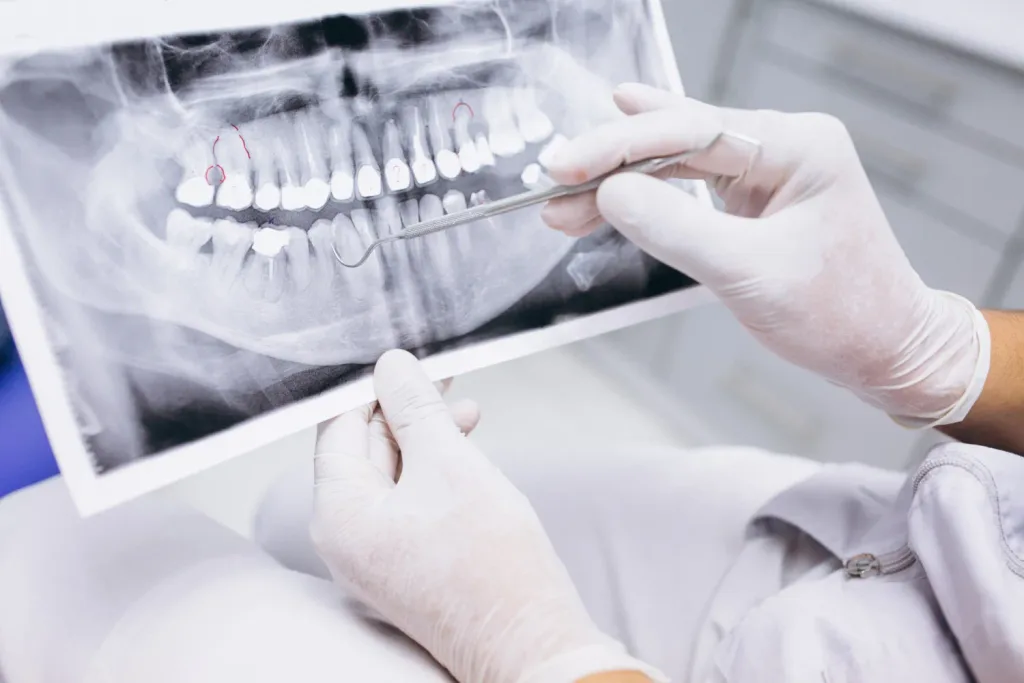
An X-ray may also be needed to assess the position of the wisdom tooth, its roots, surrounding bone and nearby structures.
This helps us decide whether the tooth can remain, whether removal is appropriate and how complex an extraction is likely to be.
When food, plaque and debris are trapped beneath an inflamed gum flap, physically cleaning the area is an important part of treatment.
Depending on the situation, local anaesthetic may be used so the area can be accessed more comfortably.
The dentist can carefully clean underneath and around the inflamed gum tissue, removing trapped food, plaque and other debris. The area can then be irrigated to flush out loosened material and reduce the bacterial load in a space that may be difficult to clean effectively at home.
For many localised episodes of pericoronitis, this professional cleaning is an important part of managing the immediate problem rather than relying on medication alone.
Not every case of pericoronitis needs antibiotics.
When inflammation is localised, professional cleaning and irrigation of the area may be sufficient alongside appropriate home care and pain relief.
Antibiotics may be considered when there are signs that infection is spreading, significant facial swelling, fever or other systemic symptoms, or another clinical reason for prescribing them. They should not be viewed as a substitute for dealing with the underlying dental problem.
If the position of the wisdom tooth continues to create an area where food and bacteria become trapped, symptoms can return once the acute episode settles.
Urgent removal may be appropriate when the wisdom tooth is clearly responsible for the symptoms and extraction can be performed safely.
Examples may include:
Before proceeding, the dentist assesses the tooth clinically and with appropriate X-rays to confirm that removal is suitable and to understand the likely complexity of the procedure.
The dentist should also explain why removal is being recommended, what the procedure involves, the relevant risks and whether there are reasonable alternatives before treatment proceeds.
Wisdom tooth removal can range from a relatively straightforward extraction to a surgical procedure.
The approach depends on how much of the tooth has erupted, its angle, root anatomy, the surrounding bone and its relationship with nearby structures.
If enough of the tooth is visible and accessible and the anatomy is favourable, it may be possible to loosen and remove it under local anaesthetic without making an incision in the gum.
A partially erupted or impacted wisdom tooth may require a surgical approach.
Depending on the individual tooth, this can involve:
Sectioning the tooth can sometimes allow it to be removed in a more controlled way rather than trying to remove the entire tooth in one piece.
You can learn more about the procedure, recovery and what to expect in our tooth extraction treatment guide.
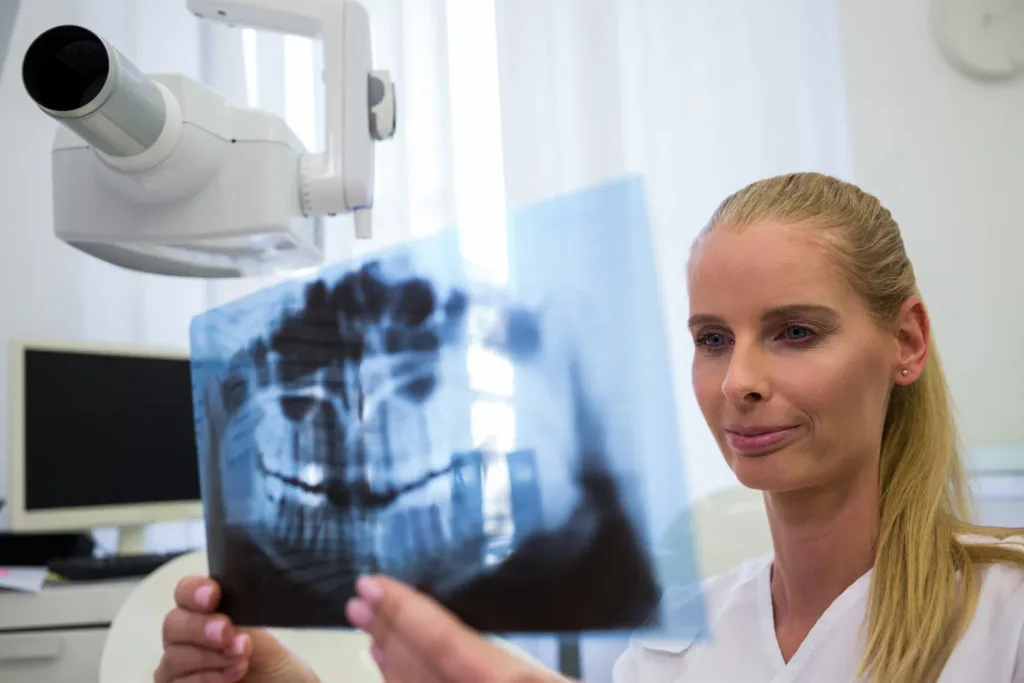
An X-ray shows information that cannot be reliably assessed by looking inside the mouth alone.
It can help the dentist assess:
For lower wisdom teeth, one particularly important consideration is the relationship between the roots and the inferior alveolar nerve, which runs through the lower jaw and supplies sensation to areas including the lower lip and chin.
A panoramic dental X-ray is commonly used to assess this relationship. If the standard X-ray suggests that the roots are particularly close to an important anatomical structure, additional three-dimensional imaging may sometimes be considered before treatment planning.
The purpose of imaging is not simply to confirm that a wisdom tooth exists. It helps us understand the anatomy and plan the safest approach for that individual tooth.
A wisdom tooth does not need to be removed simply because it is present or impacted.
If it is healthy, symptom-free, functioning normally, can be cleaned effectively and is not damaging surrounding structures, monitoring may be appropriate.
Removal is more likely to be discussed when there is a clear clinical reason, such as:
The decision should be based on the individual wisdom tooth and the problems it is causing, rather than a general rule that all wisdom teeth should come out.
If removal is being considered, you can learn more about the procedure, assessment and what to expect on our wisdom teeth removal in Brisbane and wisdom teeth removal on the Gold Coast treatment pages.
Most wisdom tooth problems can be treated by a dentist, but infections can occasionally spread beyond the immediate area around the tooth.
Arrange urgent assessment if you develop:
Call 000 or seek emergency medical care if swelling affects your breathing or speaking, extends around your eye or neck, or you have severe or worsening difficulty swallowing.
If facial swelling is the main concern, see our guide to when facial swelling is a dental emergency.

Antibiotics can help in selected cases, but they do not necessarily correct the reason the infection developed.
If a partially erupted tooth repeatedly traps food and bacteria because of its position, another episode of pericoronitis may occur after the infection settles.
This is an important point I regularly discuss with patients who have experienced several courses of treatment for the same wisdom tooth.
The aim is not simply to settle each episode as it occurs. We also need to understand why it keeps happening and whether the underlying problem can be corrected.
When recurrent pericoronitis is associated with a wisdom tooth that is unlikely to become healthy and easy to clean, definitive removal may be discussed.
Home care may make a mild problem more manageable while you arrange an appointment, but it cannot replace dental treatment when there is a significant infection.
Depending on your individual circumstances, you may be advised to:
Do not try to cut the gum, squeeze the area or drain an infection yourself.
If pain or swelling is increasing rather than settling, arrange an urgent dental assessment.

Some pain, swelling and jaw stiffness can occur after wisdom tooth removal, particularly after a surgical extraction. Your dentist will give you specific aftercare instructions based on your procedure, including advice about eating, cleaning the area, pain relief and activity.
For practical advice on eating during recovery, see our guide to what to eat after tooth extraction.
Contact your dentist if you develop:
One complication that can occur after extraction is dry socket. This happens when the protective blood clot within the socket is lost or breaks down before healing has progressed sufficiently.
It typically causes significant pain several days after the extraction and should be assessed by a dentist.
1. Is wisdom tooth pain always an emergency?
No. Mild tenderness can occur while a wisdom tooth is erupting and does not necessarily indicate infection.
Severe or increasing pain, significant swelling, pus, difficulty opening your mouth, fever or facial swelling should be assessed promptly.
2. Can a wisdom tooth be removed while it is infected?
Sometimes. Localised inflammation or infection does not automatically rule out extraction.
The dentist will assess the extent of the infection, swelling, mouth opening, tooth position and complexity before deciding whether immediate removal is appropriate.
3. What does a dentist do for acute pericoronitis?
Treatment may involve examining and cleaning underneath the inflamed gum tissue, removing trapped food and debris and irrigating the area.
Antibiotics may be prescribed when there are signs of spreading infection, systemic symptoms or another clinical indication.
4. Do all wisdom teeth need to be removed?
No. Healthy wisdom teeth that are symptom-free, functional and easy to keep clean do not automatically need extraction.
Removal is usually considered when the tooth is causing a clear problem or there is another clinical reason for treatment.
5. Can pericoronitis come back?
Yes. If the wisdom tooth remains partially erupted and its position allows food and bacteria to continue collecting beneath the gum, further episodes can occur.
Repeated pericoronitis is one reason wisdom tooth removal may eventually be recommended.
Wisdom tooth pain is a common reason patients seek urgent dental treatment.
At MGA Dental, our team regularly assesses wisdom tooth problems including acute pericoronitis, severe pain, swelling, and infected or impacted wisdom teeth.
The first priority is to understand what is causing your symptoms and whether the tooth can be safely treated or removed at that appointment.
Where appropriate, wisdom tooth removal may be performed under local anaesthetic. More complex teeth may require a surgical approach or, where necessary, referral for specialist care.
If significant inflammation, swelling or other clinical factors mean that immediate extraction is not the right first step, we can focus on managing the acute problem and plan definitive treatment when appropriate.
If you are experiencing increasing wisdom tooth pain, swelling, discharge or difficulty opening your mouth, contact MGA Dental for an assessment and let us know if your symptoms are urgent.
For urgent dental care, visit our Brisbane emergency dentist or Gold Coast emergency dentist pages.

June 16, 2026
Dr Goran Prokic explains why facial swelling should not be ignored or simply monitored at home, as it requires prompt professional assessment.
March 9, 2026
Dental emergencies can arise without warning and often at the most inconvenient time. A sudden toothache late at night, a sports injury on the weekend, or unexpected facial swelling can quickly become overwhelming. In these moments, knowing what to do and where to seek care is important. A dental emergency may involve severe pain, trauma, […]
January 21, 2026
A dental emergency can escalate quickly, often outside standard clinic hours and with little warning. Sudden tooth pain, facial swelling, or oral trauma can quickly disrupt daily life. When eating, speaking, or sleeping becomes difficult, uncertainty tends to set in fast. In these moments, many people face a practical question: should the Emergency Room (ER) […]

November 19, 2025
A sporting injury can happen in an instant – whether it’s a stray elbow on the basketball court, a collision on the football field, or a fall while cycling, the result can be more than just bruised pride. It can lead to a chipped, broken, or even a knocked-out tooth. Sports-related dental injuries are among […]

October 24, 2025
Losing a tooth can be distressing, but staying calm and acting quickly can make all the difference in saving it. When a tooth is completely displaced from its socket, known as a knocked-out or avulsed tooth, it becomes a true dental emergency. The outcome depends on how the tooth is handled and how soon professional […]

June 17, 2021
The bruised tooth may sound like an injury caused by a nasty hit of some sort, but it’s much more complicated than that. Well, it is caused by physical trauma, however not just one, but a series of small traumas. Too much shock and pressure on the teeth can sprain the ligaments and this dental […]
March 31, 2021
Sometimes, no matter how skilled your dentist is, a damaged tooth simply can’t be saved and must be removed. After the extraction, there’s usually a bit of soreness and an empty space where the tooth used to be and then it’s just a matter of waiting for the area to heal. Normally, a blood clot […]
May 19, 2018
A tooth abscess is one of the most painful dental conditions a person can experience. It occurs when a bacterial infection leads to a pocket of pus forming around a tooth or within the gums. Without treatment, the infection can spread to surrounding tissues and potentially lead to more serious health complications. That’s why recognising […]
November 6, 2017
When dental pain and discomfort appear, it’s time to call a dentist. What many people find hard to decide is whether to call their dentist immediately, or wait for the pain to go away. In some cases, things are pretty simple – if you’re feeling excruciating pain, it’s likely that the dentist’s office will be […]