Laser Teeth Whitening: How Safe Is the Procedure?
4 October 2022 | Updated: 15 May 2026

A brighter smile is one of the most common cosmetic dental goals, and professional teeth whitening remains one of the fastest ways to improve the appearance of stained or discoloured teeth.
Among the available options, laser teeth whitening has become increasingly popular because of its speed and noticeable results. However, many patients still wonder whether the procedure is safe, how it works, and what to expect afterward.
In this guide, we explain how laser teeth whitening works, what causes tooth discolouration, the potential benefits and side effects, and how it compares with other whitening treatments.
What Is Laser Teeth Whitening?
Laser teeth whitening is a professional cosmetic dental treatment designed to lighten the colour of teeth using a whitening gel activated by a specialised light or laser.
The treatment typically uses a hydrogen peroxide-based whitening gel applied directly to the teeth. A laser or whitening light is then used to accelerate the whitening process and help break down stains more effectively.
Because strong whitening agents are involved, the procedure should only be performed by trained dental professionals.
What Causes Tooth Discolouration?
Tooth staining and discolouration can happen gradually over time for several reasons.
Common causes include:
- Coffee and tea
- Red wine
- Smoking or tobacco use
- Ageing
- Certain medications
- Poor oral hygiene
- Dental trauma or injury
- Excess fluoride exposure during tooth development (fluorosis)
Some stains affect the outer enamel surface, while others develop deeper within the tooth structure.
How Does Laser Teeth Whitening Work?
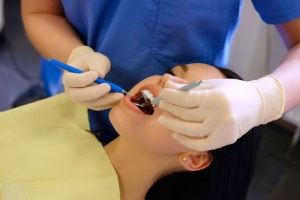
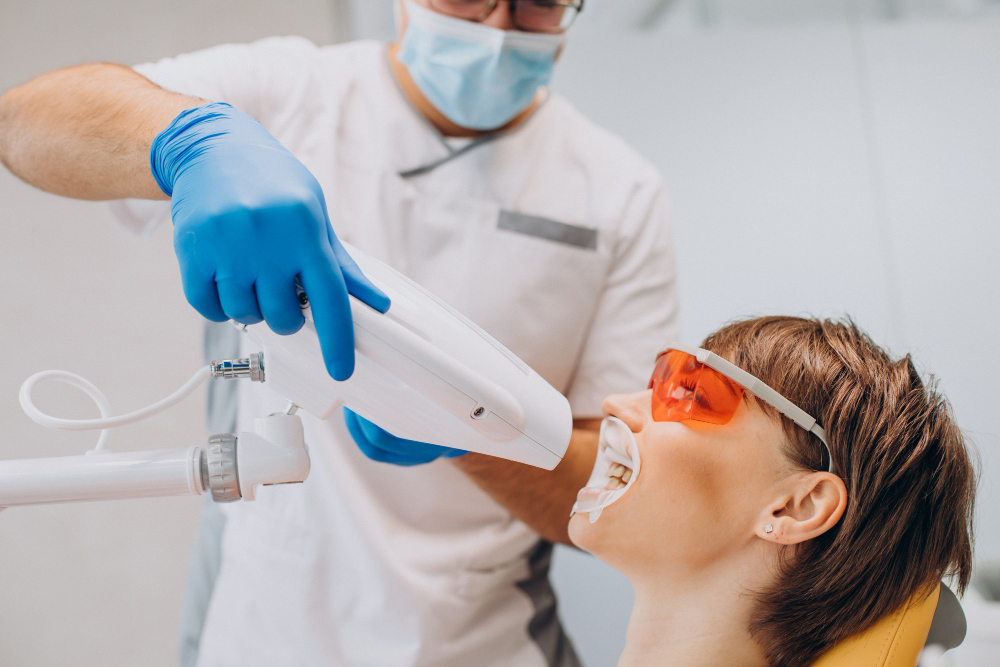
Laser whitening is usually completed in several stages during a dental appointment.
Step 1: Protecting the Gums and Soft Tissues
Your dentist will place protective barriers or shields around the gums and lips to reduce irritation from the whitening gel.
Step 2: Applying the Whitening Gel
A professional-strength whitening gel containing hydrogen peroxide is carefully applied to the teeth.
Step 3: Activating the Whitening Process
The dentist uses a laser or specialised whitening light to activate the gel and speed up the stain-removal process. Depending on the desired result, the gel may be reapplied several times during the session.
Step 4: Final Assessment
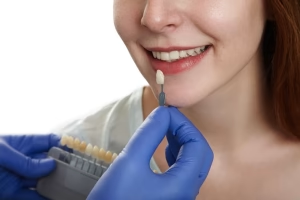
Once the whitening process is complete, the gel and protective barriers are removed, and the final tooth shade is assessed.
The procedure itself is generally painless, although some patients may experience temporary sensitivity afterward.
Is Laser Teeth Whitening Safe?
When performed by a qualified dental professional, laser teeth whitening is generally considered safe.
Professional supervision helps ensure:
- The whitening products are used correctly
- The gums and soft tissues are protected
- Tooth sensitivity is monitored
- Existing dental issues are identified beforehand
However, whitening may not be suitable for everyone. Patients with untreated cavities, gum disease, severe enamel wear, or certain dental restorations may require assessment before treatment.
Possible Side Effects
Most side effects are temporary and mild.
The most common include:
Tooth Sensitivity
Some patients experience temporary sensitivity to hot or cold foods and drinks after whitening. This usually settles within a few days.
Gum Irritation
If whitening gel comes into contact with the gums, mild irritation or tenderness may occur temporarily.
Uneven Whitening
Crowns, veneers, fillings, and other dental restorations do not whiten in the same way as natural teeth, which may affect the final appearance.
Laser Teeth Whitening Aftercare
After whitening, your teeth can be more prone to staining for a short period.
For the first 24 to 48 hours, it’s usually recommended to avoid:
- Coffee and tea
- Red wine
- Dark-coloured foods and sauces
- Smoking
- Very hot or cold foods if sensitivity is present
Drinking water regularly and maintaining good oral hygiene can help prolong results.
How Long Do Results Last?
The results of laser teeth whitening vary from person to person and depend on factors such as diet, smoking habits, oral hygiene, and natural tooth colour. With good care and occasional touch-ups, results can often last from several months to a few years.
Pros and Cons of Laser Teeth Whitening
Before choosing laser teeth whitening, it helps to understand both the benefits and the possible limitations so you can make an informed decision.
Benefits
- Fast and noticeable results
- Professionally supervised treatment
- Minimal downtime
- Effective for many common stains
- Can improve smile confidence
Potential Drawbacks
- Higher cost compared to at-home kits
- Temporary sensitivity may occur
- Some patients may require multiple sessions
- Results are not permanent
Like any cosmetic dental treatment, laser teeth whitening offers clear advantages, but it’s important to weigh them against the potential limitations before deciding if it’s right for you.
Alternatives to Laser Teeth Whitening
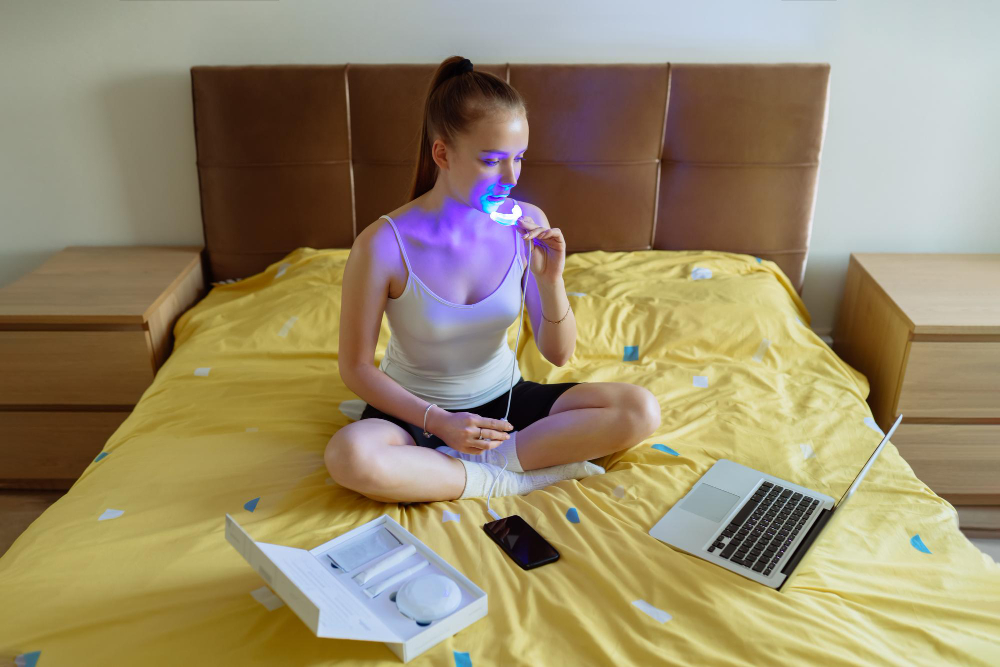
Laser whitening is not the only whitening option available.
Other treatments include:
1. Take-Home Whitening Kits from Your Dentist
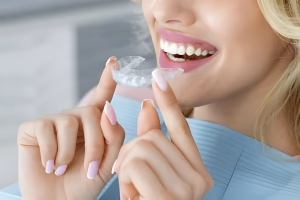
Custom-fitted trays with professional whitening gel offer gradual whitening at home under dental supervision.
2. Over-the-Counter Whitening Products
Whitening toothpastes, strips, and gels are widely available but are generally less effective than professional treatments.
3. Zoom Whitening
Zoom whitening is another professional in-chair treatment similar to laser whitening. Instead of treating each tooth individually with a laser, a specialised whitening lamp activates the gel across all teeth simultaneously.
Both treatments can produce effective results, and your dentist can help determine which option is most suitable.
Is Professional Whitening Worth It?
Professional whitening treatments are typically safer, more predictable, and more effective than many over-the-counter alternatives.
A dental assessment before whitening is important because not all staining responds equally to treatment, and underlying dental issues should be addressed first.
Professional Teeth Whitening at MGA Dental Clinic
A brighter smile should look natural, healthy, and balanced.
At MGA Dental clinic, we provide professional teeth whitening treatments tailored to your goals, oral health, and level of tooth sensitivity. Our team carefully assesses your teeth before treatment and recommends the most suitable whitening option for safe, effective results.
With clinics on the Gold Coast and in Brisbane, we’re here to help you achieve a brighter smile with professional, patient-focused care.
If you are considering professional teeth whitening, feel free to contact MGA Dental and arrange a consultation.