How to Use Dental Floss Properly
17 January 2020 | Updated: 9 January 2026
A healthy smile plays a major role in how we look and feel. Clean, strong teeth not only support confidence but also protect overall oral health. While brushing twice a day is essential, brushing alone cannot reach every area where plaque and food particles collect. This is where dental floss becomes an important part of daily care.
Many dental problems, including cavities, gum disease, and persistent bad breath, begin between the teeth or just below the gumline. These areas are difficult for a toothbrush to clean effectively. Flossing helps remove debris and plaque from these hard-to-reach spaces, reducing the risk of decay and inflammation.
In this article, we explain what dental floss is, why it matters, how to floss correctly, and how to make flossing a simple and consistent part of your daily routine.
Why Flossing Matters for Oral Health
When food particles become trapped between teeth, bacteria quickly begin to break them down. This process produces acids that weaken tooth enamel and irritate the gums. Over time, plaque can harden into tartar, which cannot be removed with brushing alone and requires professional cleaning.
Without regular flossing, these hidden areas can become the starting point for:
Flossing once a day helps disrupt plaque before it hardens and prevents bacteria from building up in places your toothbrush cannot reach.

What Is Dental Floss?
Dental floss is a thin, flexible filament designed to clean between teeth and just under the gumline. It works by gently removing plaque and food debris from areas that are otherwise inaccessible.
Modern dental floss comes in several forms, including:
While materials and designs vary, the effectiveness of flossing depends far more on technique and consistency than on the specific type used.
A Brief History of Dental Floss
The idea of cleaning between teeth dates back over 200 years. In the early 1800s, Dr Levi Spear Parmly, a dentist from New Orleans, recommended using waxed silk thread to remove debris between teeth. He believed this practice was essential for maintaining oral health.
Commercial dental floss became available later in the 19th century and gradually gained acceptance. By the late 20th century, flossing had become widely recognised as a key component of daily oral hygiene around the world.
When and How Often Should You Floss?
For most people, flossing once a day is sufficient. The best time to floss is typically in the evening, before brushing, as it removes debris accumulated throughout the day.
Flossing daily helps prevent food particles from remaining trapped overnight, when saliva production naturally decreases and bacteria can multiply more easily.
Step-by-Step Guide: How to Floss Your Teeth Properly
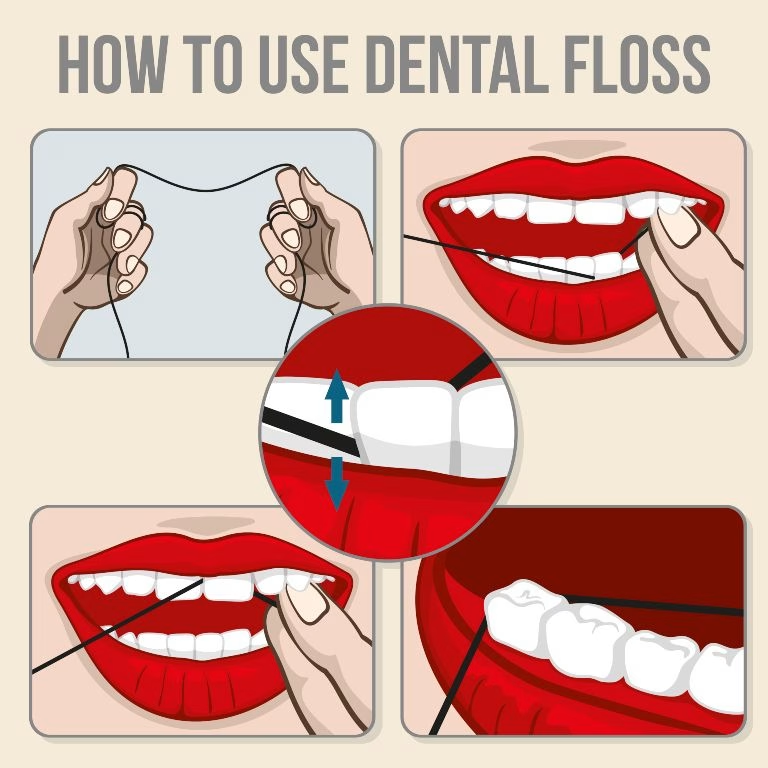
Correct technique is essential for flossing to be effective and gentle on your gums. A helpful way to remember the process is through four simple steps: wind, guide, glide, and slide.
1. Prepare the Floss
-
Wash your hands thoroughly before flossing.
-
Cut about 40-45 cm (roughly 18 inches) of floss.
-
Wind most of the floss around one middle or index finger, and the rest around the same finger on the opposite hand.
-
Leave about 2-3 cm of floss to work with.
2. Guide the Floss Between Teeth
-
Hold the floss taut between your thumbs and index fingers.
-
Gently guide it between teeth using a slow back-and-forth motion.
-
Avoid snapping the floss down, as this can irritate the gums.
3. Glide Along the Tooth Surface
-
Once the floss reaches the gumline, curve it into a C-shape around one tooth.
-
Slide the floss gently up and down along the side of the tooth.
-
Make sure to go slightly below the gumline, without forcing the floss.
4. Slide and Repeat
-
Move to a clean section of floss for each tooth.
-
Repeat the process for both sides of every tooth, including the back teeth.
Using this method ensures plaque is removed effectively while minimising gum irritation.

Flossing Tips for Comfort and Consistency
These practical tips can help make flossing more comfortable, easier to maintain, and a natural part of your daily oral care routine.
-
Be gentle. Flossing should not be painful. Mild bleeding at first is common and usually improves as gums become healthier.
-
Stay consistent. Daily flossing is far more effective than occasional flossing.
-
Take your time. Rushing increases the risk of missing areas or irritating the gums.
-
If traditional floss is difficult to use, consider floss picks or water flossers as alternatives.
Common Flossing Mistakes to Avoid
When flossing, it’s important to avoid common mistakes such as skipping the back teeth where plaque often builds up, snapping the floss into the gums, or using the same section of floss for multiple teeth. Flossing too aggressively can irritate the gums, and mild bleeding at the start should not be a reason to stop.
However, if bleeding continues beyond one to two weeks, it’s a good idea to book a dental check-up for further assessment.
Can Flossing Help Prevent Gum Disease?
Flossing plays a major role in preventing gingivitis, the earliest stage of gum disease. Gingivitis causes redness, swelling, and bleeding of the gums but is reversible with proper care.
When plaque is not removed, gingivitis can progress to periodontitis, which involves damage to the supporting bone and tissues around the teeth. At this stage, professional treatment becomes necessary. Flossing daily significantly reduces this risk by keeping the gumline clean and healthy.
Flossing With Dental Work
If you have crowns, bridges, implants, or orthodontic appliances, flossing is still essential. Special flossing tools, such as floss threaders or interdental brushes, can help clean around restorations effectively. Your dentist can recommend the best flossing method based on your individual needs.
Dental Care Support at MGA Dental
Flossing is an important part of daily oral care, but it cannot replace regular dental check-ups. Seeing your dentist allows early issues to be identified, tartar to be removed, and your oral hygiene routine to be reviewed. If flossing causes ongoing pain, bleeding, or sensitivity, a professional assessment is recommended.
At MGA Dental clinic, we believe prevention is the foundation of long-term oral health. Our team takes the time to educate patients on effective brushing and flossing techniques and provides tailored advice based on individual oral health needs.
If you have concerns about flossing, gum health, or maintaining a healthy smile, contact MGA Dental clinic to book a consultation. Professional guidance can help ensure your daily routine supports strong teeth and healthy gums for years to come.