Smoking and Teeth: How Smoking Stains Your Teeth and What You Can Do About It
3 November 2019 | Updated: 8 January 2026

Most people know that smoking affects overall health, but its impact on your teeth and gums is often underestimated. From stubborn stains to gum disease and tooth loss, smoking can quickly take a toll on your smile. While brushing, flossing, and regular dental visits are essential, tobacco use remains one of the biggest threats to long-term oral health.
Smoking doesn’t just discolour teeth. It weakens the gums, slows healing, increases the risk of infections, and makes dental treatment less predictable. The good news is that many of these effects can be reduced, and in some cases reversed, with the right care and timely treatment.
In this article, we explain how smoking affects your teeth, why stains develop, and which professional and at-home options can help restore a healthier, brighter smile.

How Smoking Affects Your Teeth and Gums
Smoking exposes your mouth to nicotine, tar, and thousands of chemicals that affect both hard and soft tissues. One of the first visible changes is tooth discolouration, but the damage often goes much deeper.
Common oral effects of smoking include:
-
Yellow, brown, or dark stains on teeth
-
Persistent bad breath
-
Reduced sense of taste and smell
-
Increased plaque and tartar buildup
-
Gum inflammation and bleeding
-
Higher risk of gum disease and bone loss
-
Slower healing after dental procedures
Smoking is also a major risk factor for periodontal disease, which can lead to loose teeth and eventual tooth loss if left untreated. In addition, heavy staining can make cosmetic and restorative treatments less effective, as underlying tooth colour may affect final results.
Quitting smoking remains the most effective way to protect your oral health. Even within weeks of quitting, circulation improves, inflammation reduces, and your mouth begins to recover.
The Wider Health Risks of Smoking
Beyond its visible impact on teeth and gums, smoking poses serious risks to overall health. In Australia alone, smoking is responsible for around 19,000 deaths each year, exceeding fatalities linked to alcohol, illegal drugs, or road accidents. It is the leading cause of lung cancer and a major contributor to chronic lung diseases such as COPD.
Smokers face a significantly higher risk of heart disease and stroke, even at low levels of tobacco use. Smoking damages blood vessels, raises blood pressure, and increases the likelihood of dangerous blood clots. It also harms the lungs, worsening conditions like asthma and increasing the risk of emphysema and chronic bronchitis.
The effects extend further, with smoking linked to cancers of the bladder, bowel, throat, pancreas, liver, and other organs. It can also affect fertility in both men and women and increase the risk of pregnancy complications.
While this article focuses on oral health, it’s important to recognise that quitting smoking benefits the entire body, not just your smile.
How Smoking Affects Your Teeth
Smoking doesn’t just impact your general health, it also has a fast and visible effect on your teeth and gums. One of the first things people notice is a change in their smile, including staining, dullness, and persistent bad breath.
While daily brushing is essential, it cannot remove deep tobacco stains or fully address smoking-related odour. Regular professional cleanings are often needed.
Smoking is a major risk factor for gum disease, as it promotes inflammation and reduces blood flow to the gums. Over time, this can damage the supporting bone and lead to loose teeth or tooth loss. It can also dull your sense of taste and make oral infections harder to detect.
In the long term, smoking increases the risk of tooth decay and complicates restorative dental treatments. Heavy discolouration and gum recession can affect the appearance and fit of crowns or other restorations.
Quitting smoking remains the most effective way to protect your oral health and maintain a cleaner, healthier smile.
Why Smoking Causes Brown Stains on Teeth
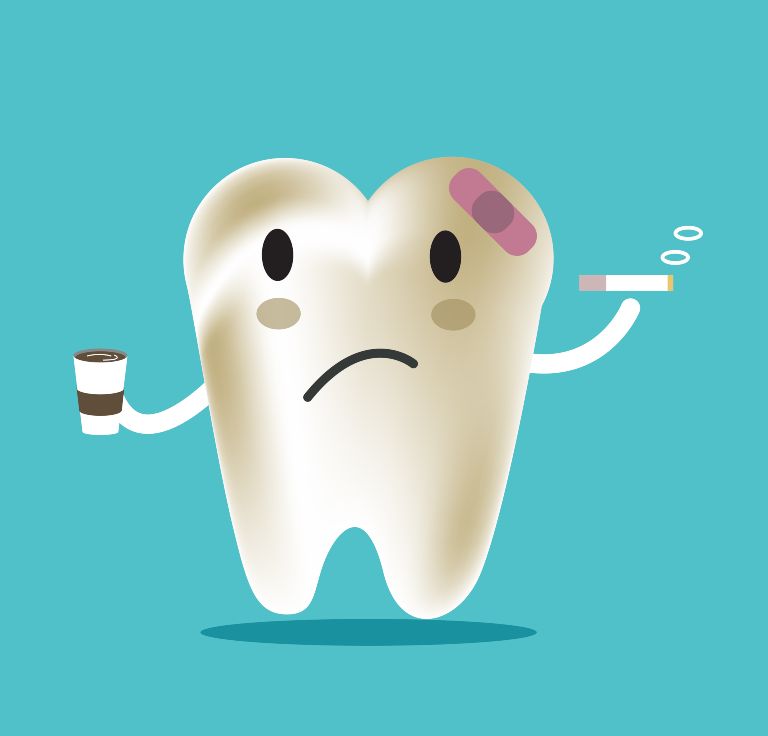
Brown stains caused by smoking usually begin on the surface of the teeth, affecting the enamel. Over time, however, these stains can penetrate deeper into the tooth structure, making them more difficult to remove with regular brushing alone.
Staining occurs because:
-
Nicotine and tar adhere easily to enamel and build up with continued smoking
-
Plaque hardens into tartar, which absorbs pigments from tobacco and other substances
-
Reduced saliva flow limits the mouth’s natural ability to wash away staining particles
Smoking is not the only factor that contributes to brown stains. Dark-coloured foods and drinks such as coffee, tea, red wine, and cola can intensify discolouration, especially when combined with poor oral hygiene. Once plaque hardens into tartar, it cannot be removed at home and requires professional dental cleaning.
In some cases, decay can develop beneath plaque or tartar deposits. This may appear as dark spots or cavities and can lead to sensitivity or pain if left untreated.

How to Remove Smoking Stains From Teeth
Removing smoking-related stains usually requires a combination of good daily habits and professional dental care. Because tobacco stains tend to bind strongly to plaque and tartar, home care alone is often not enough to restore the natural colour of your teeth.
Professional dental treatments are the most effective way to remove stubborn stains. These may include:
-
Scale and clean to remove plaque and hardened tartar where stains accumulate
-
Air polishing to gently lift surface stains from enamel
-
Professional teeth whitening, when suitable, to brighten teeth evenly
-
Restorative treatments such as fillings or crowns if staining is linked to decay or structural damage
At home, supporting your oral health plays an important role in preventing stains from returning. This includes brushing twice daily with fluoride toothpaste, flossing every day to control plaque, limiting dark foods and drinks, and staying well hydrated to encourage healthy saliva flow.
Some people try home whitening methods such as baking soda, oil pulling, or hydrogen peroxide. Apple cider vinegar is a century-old disinfectant and natural cleaning product. Swishing it around in your mouth from time to time can act as an excellent cleaning agent.
While these approaches may offer mild results, they can damage enamel or irritate the gums if used incorrectly. For safe and effective stain removal, it is always best to speak with your dentist before trying any whitening method on your own.
Why Regular Dental Visits Matter for Smokers
Because smoking increases the risk of gum disease and oral infections, regular dental check-ups are especially important. Dentists can detect early changes in gum health, remove hardened tartar, and recommend targeted treatments before problems become more serious. Routine visits also improve the success of cosmetic treatments and help maintain results for longer.
Dental Care at MGA Dental Clinic
At MGA Dental clinics in Brisbane and the Gold Coast, we understand the challenges smokers face when it comes to maintaining a healthy smile. Our team provides professional cleaning, stain removal, gum care, and personalised treatment plans to help minimise the effects of smoking on your teeth and gums.
If you’re concerned about tooth staining, gum health, or long-term damage caused by smoking, contact our team at MGA Dental to book a consultation. We’re here to help you protect your oral health and restore confidence in your smile.